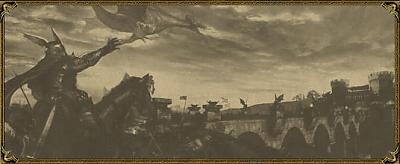
The History of the World of Lineage 2
An old bard's tale by the campfire - in twenty chapters
He drew a deep pull of smoke, breathed it in, and slowly let it out.
Most of his face was hidden beneath a thick old hood, and behind him there was nothing but impenetrable darkness. In the faint glow of his pipe it was impossible to make out his features.
He called himself a bard, yet no one believed him - his voice was hoarse and rough. There was something suspicious... in the fact that he traveled alone through a forest full of dangers. Still, he offered to tell us a story in exchange for food and the warmth of our fire. How could we leave him alone in that cold forest? And so we agreed.
We settled in comfortably around the fire, keeping our weapons close at hand in case of danger, and began to listen carefully.
The night chilled us to the bone. The man set down his pipe and began his tale...
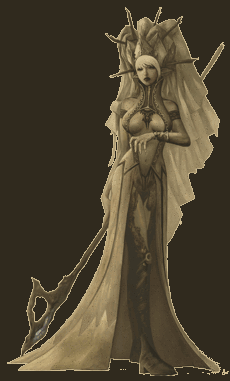
Chapter 1. Genesis
The story I wish to tell you is about those we call the Gods. Listen carefully - as though it were the truth...
Long, long ago, in times beyond all imagining, there existed only a sphere, and within it was contained all of creation. There was nothing to which it could be compared - and so the sphere was both large and small, dark and bright, everything and nothing. After a hundred million years, the sphere began to grow in size, and at the same moment two forces began to appear. Slowly but surely they grew, and in time they separated into White Light and Darkness. The White Light took a female form and named herself Einhasad. The Darkness took a male form and gave itself the name Gran Kain. These two beings gave rise to a new universe and to all that exists now.
Einhasad and Gran Kain joined their efforts to break free from the sphere. As a result of their experiment, the sphere shattered into pieces. Some of them soared upward and became the Heavens; others fell downward to become the Foundation. Between the Heavens and the Foundation appeared the Water, and some parts of the Foundation rose up to become the Land.
The spirit of the sphere - the Ether - was also caught up in the dissolution of all things. This brought forth various animals and plants. The "Creation of Genesis" was likewise formed from this spirit, and its finest representatives were the Giants. They were known as the Wise, and their minds were as strong as their bodies. The Giants vowed to believe in Einhasad and Gran Kain. The two were pleased with the Giants and appointed them masters over all other creatures. This was before the coming of death and of a true paradise.
In time, Einhasad and Gran Kain had children, none of them deprived of the divine gift. The first five of them were granted power over the world. The eldest daughter, Shilen, received dominion over water. The eldest son, Pa'agrio, was given control over fire, and the second daughter, Maphr, over the earth. The second son, Sayha, became master of the wind.
Only for the youngest, Eva, there were no elements left. She began to compose music and to write verse. While the other gods were occupied with their duties, Eva wrote poems and set them to music. And so began the age of the gods, and there was nothing in the world unknown to them.
Chapter 2. The Creation of the Races
Einhasad was the goddess of creation, and she shaped forms with her own spirit. Her children used their powers to bring life to these forms.
Shilen breathed the spirit of water into the first form that was created. So came the race of Elves.
Pa'agrio breathed the spirit of fire into the second form that was created. So came the race of Orcs.
Maphr breathed the spirit of earth into the third form that was created. So came the race of Dwarves.
Sayha breathed the spirit of wind into the fourth form that was created. So came the race of the Artheas.
Gran Kain was the god of destruction. When he saw what Einhasad had achieved, curiosity stirred within him, mingled with envy. He repeated what Einhasad had done and created a form of his own, according to his own understanding. Then he turned to Shilen, their eldest daughter, asking her to breathe a spirit into his form. She was greatly surprised and asked him, "Father, why do you wish to do this? Einhasad, my mother, is responsible for creation. You are the god of destruction, and any being to whom you give life will bring only misfortune upon itself and others."
But Gran Kain would not relent. After much persuasion, he at last won Shilen's consent.
"I will do it. But I have already given the spirit of water to Mother. All that I can give you is what remains." Shilen gave her father the spirit of rotten water, which Gran Kain gladly accepted.
Yet Gran Kain decided that a single spirit would not be enough for his creation. So he went to Pa'agrio, his eldest son. Like Shilen, Pa'agrio warned his father. But he could not refuse him, and gave him the spirit of dying fire. Gran Kain gladly accepted that as well.
Maphr tearfully begged her father to abandon his scheme, but in the end she too gave him the spirit of poor and filthy earth. Sayha, for his part, gave his father the spirit of uncontrollable wind.
Satisfied, Gran Kain gathered all that he had received from his children and cried out, "Behold the beings I have created! Look upon those born of the spirits of water, fire, earth, and wind! They will be stronger and wiser than the Giants! They will rule the world!"
Gran Kain felt great pride and proclaimed it to all the world. He breathed the spirits into his creations. But the result was dreadful. These beings were weak, foolish, cunning, and cowardly. All the gods rejected Gran Kain's creations with contempt. He himself was forced to hide in shame for a time. He abandoned his creations. And those creations were Humans.
The race of Elves was wise and receptive to magic. But the Elves were not so wise as the Giants. And so the Elves were made to serve the Giants in politics and in magical work.
The race of Orcs was strong. They possessed inexhaustible strength and tremendous force of will. Of course, they were not as strong as the Giants. And so the Orcs served the Giants as cannon fodder in their various wars.
The race of Dwarves was highly skilled in everything to do with engineering, mathematics, and the mastery of various technical disciplines. They served the Giants as bankers and as laborers in their workshops.
The winged race of the Artheas were freedom-loving and curious creatures. The Giants wished to enslave them. But one thing stood in their way - an Artheas, once caught and placed in a cage, would quickly lose its life force and die. The Giants had no choice but to let the Artheas remain free. The Artheas often visited the city of the Giants and brought them news from other parts of the world.
Humans could do none of these things well, and they became the slaves of the Giants, performing the lowest and dirtiest labor. Their lives were no better than those of animals.
Chapter 3. The War of the Gods
Gran Kain was a free god. Yet he made an enormous mistake by seducing Shilen, his eldest daughter. It became impossible to hide it all from Einhasad once Shilen grew with child. Einhasad's fury knew no bounds when she learned what had happened. By Einhasad's will, her eldest daughter ceased to be the goddess of water and, moreover, was banished from the continent. Gran Kain turned away from her, and so she was left alone with her misery.
Pregnant, Shilen fled to the East. Deep in the thickets of a dark forest she gave birth - cursing her mother and father with every wave of her labor pains.
The children born of Shilen took on the despair and rage of her curses and turned into demons. The mightiest and strongest of them became "Dragons."
There were six dragons in all - against the six gods. Shilen was enraged at the mother who had banished her, and at the father who had seduced her and then left her alone. Gathering all her might and all her children, she raised an army to take vengeance upon the gods.
The strongest of the dragons were to stand in the front ranks of the demon army, to battle the gods themselves. Aulakiria, the dragon of light, heard of this, looked upon Shilen with sorrow, and said, "You know not what you do. Do you truly wish to destroy the gods? Do you truly wish to drown your mother, your father, and the others in pools of their own blood?"
Her plea had no effect on Shilen.
And so at last the bloody battle began, as the demon army stormed the palace, the dwelling of the gods. The six dragons left not one stone of the palace standing. Even the gods were terrified by the incredible power of the dragons. The battle seemed as though it would last an eternity. Yet if the battle had not been stopped, the world would have ceased to exist, and all living things would have been destroyed.
Countless messengers of the gods and demons fell in the battle. Each day lightning flashed and thunder roared, for such mighty powers clashed in the heavens. The Giants and all other living things trembled with fear as they watched the battle in the skies.
The most ferocious battle continued for several years, and in the end the balance gradually tilted in favor of one side. Despite the wounds they had suffered, Einhasad and Gran Kain held the advantage, destroying a vast number of demons.
The dragons fought on, though they were grievously wounded and scarred. Their exhaustion grew ever more apparent. After a time it seemed as though the war would end in the utter annihilation of the demon army. In the end, the dragons spread their wings and flew toward the earth to save themselves. The surviving demons followed after them. The gods, wishing to wipe out the retreating foe, were nonetheless so wounded that they could not. All they could do was watch the remnants of the demon army flying toward the earth.
As Shilen's children perished one after another, having lost the war against the gods, she was filled with grief. She devised the Underworld and set herself at its head.
Chapter 4. The Great Flood
After Shilen's departure, power over the water passed to Eva. She was gentle by nature, and after her sister's downfall and the war of gods and demons, she became even more timid and fearful. To escape the burden of responsibility that had fallen upon her shoulders, she dug a tunnel at the bottom of a lake and hid herself there.
There was no one to govern the spirits of water, and so, without purpose, they wandered aimlessly through the world. In one place too much water gathered, forming a swamp. In another, by contrast, water was so scarce that a desert formed. It often happened that part of the continent would suddenly sink beneath the water, or a new island would rise out of nowhere. And it also happened that somewhere rain would fall without ceasing, day and night, until the water covered everything but the highest mountain peaks.
Where patches of land remained uncovered by water, enormous numbers of living creatures crowded together. On land and in the ocean alike, all living things suffered from this calamity. On behalf of all living things, the Giants petitioned the gods for aid.
Einhasad and Gran Kain searched the whole continent and at last found the lake where Eva was hiding.
"Eva, look at what has come to pass because you shunned your duties. You are destroying the harmony of this continent, into which we poured so much effort. I will not endure it if you do not heed me from this day forth." Einhasad was so enraged that her eyes blazed with fire.
Because of the floods, countless Giants and other creatures had crossed over into Shilen's world, which could not but stir Einhasad's envy. Trembling with fear, Eva yielded to her mother. When Eva once more took up the duty of regulating the waters, the calamities gradually ceased. Yet it was impossible to restore the continent, which lay in ruins.
Chapter 5. The Challenge of the Giants
The Giants grew more and more skeptical of all that was happening: first Gran Kain had created Humans, proving his own foolishness, then behaved disgracefully toward his own daughter, as did Einhasad with her jealousy. The Underworld that Shilen had created spawned a multitude of terrible beings. Eva, through her weakness and ineptitude, had turned the continent into a rather pitiful sight. In the minds of the Giants, the seeds of distrust and doubt took root. Did such heavenly beings deserve worship and reverence?
The Giants could travel in chariots made by their own hands, and they had free access to the palace of the gods. They could also use magical knowledge to lift an island into the air and live there like gods. They could live so long that their time was comparable to eternity. And the Giants came to believe themselves the equals of the gods. Despite their wisdom, they grew excessively arrogant.
And so the Giants resolved to become gods.
They began to experiment, altering living organisms in order to create new forms of life. The Giants called this kind of magical art "science." Drunk on power, the Giants raised a mighty army to make war upon the gods, despite even the failure of Shilen, her six dragons, and her demon army in that very same endeavor.
The gods saw these preparations and were enraged. Einhasad, who claimed sole authority over all acts of creation, was struck speechless by the fury that seized her. She swore to destroy all the Giants along with the continent and the rest of the world. Gran Kain called for calm.
"Since you are the Mother of Creation," he said, "the destruction of all that exists is my prerogative. You know all too well what came of it when I took your task upon myself. If you still desire to destroy the whole world, you will have to fight me." Gran Kain would not at any cost allow the continent to be destroyed, and Einhasad was deeply offended by his interference. Yet since they were of equal standing, she could not stop him.
In the end, Einhasad compromised. And to punish the Giants, she asked Gran Kain for his hammer - known as the Hammer of Despair. Because of its great destructive power, even Gran Kain did not use it. And yet, in spite of everything, Einhasad raised the hammer high above her head and hurled it down, straight into the heart of the city of the Giants.
Chapter 6. The End of an Age
And at the moment when fire rained down from the heavens, the Giants realized what a monstrously foolish mistake they had made. Summoning all their strength, the Giants rose into the sky to subdue the Hammer of Despair, but their efforts were only enough to shift the Hammer the smallest fraction, as it continued to shower the earth with fire.
That was enough to destroy the greatest city in the world; a multitude of living creatures perished as well. The enormous hole torn open in the body of the earth was engulfed by a wave of terrifying force. In the end, scarcely a single Giant was left upon the earth.
Those Giants who managed to survive fled to the east to escape Einhasad's wrath. Their path was much like the one Shilen had chosen in her time. Einhasad continued her pursuit and destroyed the Giants one after another, scorching them with deadly lightning from the heavens. Those who remained alive trembled in fear and turned with pleas to Gran Kain.
"Gran Kain, Gran Kain! We have realized that we chose the wrong path. Only you can stop the wrath and madness of Einhasad. Do not let us perish - us, who were born of the gods themselves, us, the wisest and strongest beings in all the world!"
Suddenly Gran Kain felt a deep pity for these wretched beings. He decided that the Giants had suffered enough and had atoned for their guilt in full. He raised up the deepest waters of the southern seas, and thereby blocked Einhasad's path.
But Einhasad cried out in anger, "What is this? Who dares to meddle with me? Eva, my beloved daughter, remove at once the water that blocks my path, or prepare to share the fate of your elder sister!"
The frightened Eva at once carried out her mother's command. And Einhasad continued her triumphant march, destroying every Giant in her path. And the Giants once again begged for help.
"Gran Kain! Strongest of the gods! Einhasad continues to destroy us - have mercy and save us!"
Gran Kain raised up the mass of earth on which the Giants stood. An enormous cliff barred Einhasad's path, and she cried out in a loud voice.
"Maphr, my beloved daughter! Who dares to meddle with me? Lower the earth at once to its proper place. Or prepare for the fate of your sister!"
Frightened by these words, Maphr tried to move the earth, but Gran Kain stopped her.
"Einhasad, why do you not calm your wrath? All the world knows your malice and trembles before your fury. The wise but foolish Giants have already paid an enormous price to atone for their mistake. Only look! A race of proud and noble beings - who once ruled the world - has now found refuge on a narrow strip of land. No longer will they be able to challenge the gods. This place will forever become their prison. Calm your wrath; your vengeance is fulfilled."
Einhasad could not but heed him and could not act against the will of Gran Kain - he possessed powers equal to her own. She decided, as Gran Kain had said, to leave the Giants on that strip of land so that they might atone for their sins. The hunt was over, and Einhasad returned home.
Afterward, Einhasad rarely interfered in what happened on the Earth, for she had grown deeply disappointed in the creatures who dwelt upon it. Gran Kain also agreed not to show himself there. The age of the gods was drawing to its close.
Chapter 7. Back at the Campfire
The stranger suddenly broke off his tale.
Spellbound by what we had heard, we sat in silence as he initiated us into the secrets of the world's history. His voice, though soft, reached into the very depths of our minds - as though it were some kind of magic. The myth he told was fundamentally different from the one we knew, yet there were no objections. We, hardened and mighty warriors, were filled with awe before this man, and even feared him a little. Suddenly an owl beat its wings nearby, and we started in surprise.
The stranger smirked, lifted his barely smoldering pipe to his lips, and continued his tale.
"Do not reject my story of the gods merely because it differs from those you have heard. Could it be that a wandering poet is closer to the truth than all your priests? The history of the gods is the will of the gods, not of men. How, then, can mere priests know the truth? Listen carefully... I will continue the story. The story of the world after the disappearance of the gods. Your story."
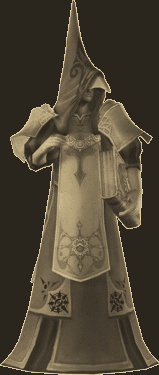
Chapter 8. The Aftermath
Now, after the sudden disappearance of the Giants, panic and disorder reigned throughout the world. The accustomed order of things had been broken; the races of Elves, Dark Elves, Dwarves, and Humans gained an unexpected freedom and, along with it, the necessity of surviving on their own in a vast world. Before them lay a world half-ruined and laid waste by the Hammer of Despair. Many had perished during the calamities brought by the Mother of Creation, but still more perished in the chaos and disorder that followed. The races turned to the gods with fervent calls for help, but the answer was silence.
The Elves were the first to take control of the situation, for it was they who had handled politics in the time of the Giants. The Elves succeeded in reuniting the races, and for a time harmony reigned in the world. But time passed, and as it did it became clear that the Elves were not able to govern others as effectively as the Giants had once done. The first to grow discontented were the Orcs.
"Who said the Elves are stronger than us? No one! Do they have the right to rule over us? No! It shall never be that beings weaker than we should stand above us!"
The military might of the Orcs was overwhelming, and the peaceably living Elves could not be a worthy adversary for the proud and fearless Orc warriors. The Orcs moved like lightning, and soon most of the land belonged to them, while the Elves were driven into a corner of the continent. There they sought the support of the Dwarves, who, possessing vast resources and superb weapons, had a chance to hold out against the Orcs.
"Race of the earth," cried the Elves, "we ask for your help. The merciless Orc hordes surpass us in strength. We can fight against them together - and then we will have a chance!"
But the Dwarves coldly rejected their pleas for help. It seemed to them that the Orcs were now the victors. And if that was so, why should the pragmatic, calculating Dwarves entangle themselves with the losers? The Elves were enraged by this turn of events, but they could change nothing.
The next race to whom the Elves turned for help was the race of the wind - the Artheas. Their skills in reconnaissance and aerial assault would have been enough to win victory over the Orcs. An Elven delegation set out to the edge of the world to seek the aid of the Artheas.
"Race of the wind, we ask for your help! The Orcs oppress us barbarically. If we unite, we can teach them a lesson the like of which they have never had!"
But, as always, the Artheas had no interest in political and military conflicts. They remained neutral and hid themselves even better from prying eyes. The Elves were in despair.
"Alas, no one will come to our aid! Is this the end? Will the filthy Orcs rule the world and demand glory and riches as though it were their due?"
Chapter 9. A New Alliance
Rejected by the calculating Dwarves and the indifferent Artheas, the Elves remained as alone as ever in their struggle against the Orcs. In despair they lamented their fate, when suddenly a stranger appeared among them and threw himself face-down before the king of the Elves. The king drew closer to the stranger, only to realize in an instant that before him stood the leader of the Humans. On the man's head was a crown of three branches.
"Who has come to us? Could this truly be the leader of the Humans, those lowly creatures?" The king was bewildered. "Have you come to mock our misfortune?"
The man bowed his head before the king and said, "No, O wise king. We have come with an offer of help. Perhaps our humble strength may be of use to you."
The Elves were glad at this turn of events, and although the Humans were foolish and weak, their vast numbers could prove useful in battle.
"Well then, you may indeed be of use to us." The king agreed without hesitation. "You are insignificant and worthless creatures, yet you are loyal and ready to give your lives for us in battle. That is commendable. And I accept your offer."
The king of the Humans again threw himself face-down before his Elven counterpart, then raised his head, and their eyes met. "O most noble of Elves," he said, "we Humans ask that you grant but one request before we begin to fight for the victory of the Elves. We are too weak. We cannot stand against the Orcs, and so we ask you to give us the strength to withstand them. We ask you to teach us Elven magic."
This bold proposal threw the Elves into confusion. Teach the Humans their magic? Never! The Elves were already prepared to incinerate the insolent one, but then the leader of the Elves intervened. Veora, for that was her name, decided that the Humans, even if taught magic, would not threaten the Elves. And in the war against the Orcs they were too weak and could not manage without help. And so she made the decision that would later cost her her life - to open the magical secrets of her people to the Humans.
The Humans soaked up knowledge like a sponge, learning far faster than the Elves had expected. Their physical attributes were not as superb as those of the Orcs - yet constant toil and strife within their own race had tempered the Humans. They were able and skilled warriors, and most of all - they were so numerous that the Human army soon became a great force.
Chapter 10. Friends and Foes
And so the war began. The alliance of Humans and Elves gradually approached its goal - the overthrow of the Orcish expansion. When the balance of this war tilted toward the alliance, the Dwarves renounced the losing Orcs in favor of the Human army and began supplying the Humans with war materiel. Now, clad in the mightiest armor and armed with the sharpest Dwarven blades, the Humans could defeat the Orcs even without the Elves' intervention.
The Elves grew uneasy, and although the alliance continued its triumphant march, they felt that the Humans' strength was growing and slipping out of their control. And yet they could not even imagine that the lowest of races - the filthy Humans - might conceive of turning against the great Elves. Soon the Orcs were defeated, and the Elves forgot about the Humans and withdrew from them. The Humans, meanwhile, continued to study the higher forms of magic. The Orcs had no choice but to sign a treaty of peace humiliating to them and return to the caves in the northern part of Elmore.
The leader of the Orcs, laughing in the faces of the Elves, said to them, "Fools! The victory belongs not to you, but to these baseborn swine - the Humans. How will you rein in the monsters you yourselves have created?"
The leader of the Orcs proved right - and the Elves faced a new threat when the Humans made war upon them. But their forces were not equal - the Elves were inferior to the Humans in everything, even in the magic the Humans had mastered almost to perfection.
And once again a battle of magic against magic broke out across the lands. In the end, the Elves were forced to retreat to their native forest and take shelter in it from their attackers. There they prepared for a decisive strike against the enemy's forces. Their magic was multiplied many times over in those forests, and they were counting on precisely this trump card in the decisive clash. But they miscalculated - the Human army was too numerous for even Elven magic to crush. The battle lasted three days. When it ended and the bloody veil lifted from their eyes, the Elves were horrified. Most of them had perished, while the Humans kept advancing and advancing in an endless stream. And the Elves withdrew into the deepest part of the forest, sealing themselves off from the rest of the world with magical barriers as a final measure.
And so the Humans became the greatest conquerors in the world.
Chapter 11. At the Campfire Again
The stranger fell silent once more; another part of the story was finished.
What we had heard differed from everything we had heard before, and yet the whole tale carried something familiar about it. A beautiful Elf among us was moved to the depths of her soul, tears streaming down her cheeks.
The night spread its embrace over us. The beasts of the forest had grown quiet, the wind had ceased to rustle in the branches, even the babbling of the brook had become soft and barely audible. Only our breathing and the crackle of the burning fire sounded in the night. It seemed as though every living thing around us was listening to the stranger's story.
"So, is it not amusing that the lowest of the races, the Humans, in the end attained greater power than all the other races? I will tell you the secret - it lies in the strength of the human spirit. Even the gods could not imagine that Humans would one day be able to rule the world."
"Well then, now I will tell you the story of the most remarkable human kingdom that ever existed on the earth. This is the story of the Humans who repeated the path of the Giants."
Chapter 12. History Rewritten
Human kingdoms in a primitive form had arisen as far back as the time of the war with the Orcs and Elves. Their core was made up of the clan of Athen and the most skilled mages of that era. This faction was the most influential, and it imposed its influence by violence and threats, which from time to time led to armed conflicts.
The leader of Athen, Shuniman, in the end restored order, uniting the lands now known as Aden and Elmore. He named his kingdom Elmoreden and ascended the throne, becoming emperor and exchanging the crown of three tree branches for a crown of gold and jewels. In the teachings of his followers, Shuniman later became almost a god.
One question troubled the emperor: the lifespan of Humans was short. The fact that Gran Kain, the god of death and destruction, was their creator had bred in Humans a certain inferiority complex, coupled with the story of Humans having been created from the leftovers of the other races. All this brought little pleasure to the new rulers of the world. Now that they had created a new kingdom, the Humans needed a new mythology as well, a new history of their kind, proving their noble origins.
In the end, after carrying out a large-scale religious reform, Shuniman rejected the worship of Gran Kain and made Einhasad the goddess and patroness of the human race. The myth and the history changed. So too did the attitude toward those who preached black magic and the followers of Gran Kain - now they were cruelly persecuted. The religious reform lasted over several generations. This led to the belief becoming firmly fixed in the minds of Humans that their creator had been Einhasad, while Gran Kain was merely the god of evil. When he learned of this, he only laughed.
"Even if they will not serve me, I will not be angered with them. But can they truly be so foolish as to try to grasp the sky with their hands?"
Chapter 13. Elmoreden and Perion
While the kingdom of Elmoreden, led by Emperor Shuniman, grew and flourished, a region called Gracia, across the sea, still writhed in the agony of disorder. Geographically this region was extremely varied and dangerous. And although many warring human factions fought for power, none of them was strong enough to unite them all into a single kingdom. The region was torn only by petty conflicts, which rarely grew into anything resembling large-scale battles.
But the day and hour came when all the scattered factions were forced to unite under a single banner - for one purpose - to stand against the enormous army of Elmoreden, which had marched on Gracia in war. Many of the nobility and aristocracy fell in those battles. Those who managed to survive were strengthened and tempered many times over. In the end, the attack was repelled, but the losses were enormous. The lesson learned served as the impetus for the creation of a single kingdom across the whole region - one named Perion.
But the confrontation continued. The kingdom of Elmoreden, which had been founded first and possessed superior military resources, had incomparably greater chances of success. Yet Perion too had certain advantages. First, the sea that separated one kingdom from the other held back the attackers, and second, the people of Perion possessed mighty artifacts left on their land by the Giants. These relics could be used for military purposes as well, and with enormous success.
And so it came to pass that even with a magnificent army, the kingdom of Elmoreden could not subjugate Perion.
Chapter 14. Beleth and the Ivory Tower
In the kingdom of Elmoreden stood the Ivory Tower, an institution whose chief occupation was the study of magic. The mages of the Tower directed all their efforts toward the recovery, study, and improvement of the magic of the ancient Giants. Their magical mastery reached unprecedented heights, and one day their influence in the kingdom became comparable to the influence of the Emperor of Elmoreden.
Among the mages of the Tower was one by the name of Beleth, the strongest of mages and one of the greatest geniuses ever to live on the earth. The magic of the Giants so consumed him that after a time he came to know nearly all its secrets. Yet this magic was cursed, and therefore unsuitable for Humans. Ambition and a thirst for power took hold of Beleth. Alarmed by this turn of events, the mages of the Tower and the upper ranks of the royal estate decided to join their forces to be rid of Beleth. But this was no easy thing to accomplish - Beleth was extraordinarily strong in the art of dark magic.
In the end the mages of the Ivory Tower had no choice, and they used forbidden black magic in order to suppress Beleth's power, lure him into a trap, and imprison him in a dungeon in the cellars of the Tower. But despite the fact that he was guarded by both warriors and mages, he nonetheless managed to break free of his magical and physical bonds and escape. He set out for the Isle of the Border of Hell to recover his former power and continue seizing lands.
The magical trap set for Beleth led to cataclysms in the southern part of the region, now known as Gludio. The land was scorched by magic, and many people perished when the spell was cast. The kingdom laid all the blame upon Beleth, declaring him a devil in human form.
Chapter 15. The Discord of the Elves
At about this same time, great changes took place in the Elven forests. Having lost control of the continent, the Elves let down their guard and almost ceased to hide themselves. They forgot the time when they had wished to rule unchallenged over all others, and now lived in harmony with themselves and with the world around them.
Among the general mass of Elves, who called themselves Tree Elves, a group of Brown Elves stood out. They insisted on continuing the battle for power, even by using forbidden black magic. The other Elves, however, did not share these views.
One day a human mage appeared among the Brown Elves and, approaching their leader, said:
"You desire power and might. But the Tree Elves fear that you will gain enormous strength. You deserve that strength. Yet they care only for their own safety. They fear you, they fear Humans. It is precisely these fears that have brought you Elves to your present decline."
The leader of the Brown Elves asked, "Who are you, human? And what do you need here, among us?"
"My name is Dasparion, I am an ordinary mage. But I possess a power so necessary to you. I can help you satisfy your ambitions... and in exchange you must help me."
"And how is it that we can help you?"
"I want only one thing - to learn the secret of eternal youth." A barely perceptible smile touched his face. "Though I possess the art of magic, I am only a human, and my lifespan is not so very long. So... what will your decision be? We can help each other obtain what we desire."
The Brown Elves greatly wished to gain knowledge of Dasparion's black magic, and so they agreed to his proposal. Dasparion taught them all that he himself knew, and as his reward received the secret of immortality. Satisfied, he left the forest.
The Brown Elves declared Gran Kain their new patron, while Einhasad remained the patroness of the Tree Elves. The Tree Elves were enraged by such behavior on the part of the Brown Elves, and a battle broke out between them. At the decisive moment, the Brown Elves used a deadly spell of black magic to destroy the Tree Elves. The Tree Elves, in their death agony, still managed to lay a curse upon the Brown Elves, transforming them into a race of darkness, known to all as the race of Dark Elves.
Chapter 16. The End of the Golden Age
The Golden Age for Elmoreden came a hundred years after its founding, during the reign of Emperor Baium. Possessing tremendous charisma and unmatched qualities of leadership, Baium managed to create the strongest army in the kingdom's history. This army drove the Orcs from the northern parts of Elmore into the black forests, later known as the Kingdom of the Orcs. And besides this, Baium's army periodically attacked the kingdom of Perion, in the end reconquering the southern part of Gracia.
Having grown old, Baium lost interest in conquest. He directed all the kingdom's resources toward the building of a tower of the most intricate design, reaching up into the heavens.
"All who live on the continent fear me, from north to south, from west to east! I command tens of thousands of lives with a single wave of my hand: to some I grant life, to others - death. My power is absolute. There is only one thing I cannot bear - that this power will end with my death! Therefore I must ask the gods for immortality and rule my people forever!"
For thirty years Baium's tower was built. He intended to use the tower to ascend to the gods and obtain from them the secret of immortality. And when he reached the very top, the gods said to him the following:
"Human, how dare you ascend here and ask us for eternal life for yourself? Has the lesson of the Giants taught you nothing? Very well, since your wish is eternal life, we will grant it to you. But you will never be able to leave this tower."
Baium brought down upon himself the wrath of the gods and remained forever imprisoned at the very top of his tower. After the emperor's sudden disappearance, panic broke out across the land. The emperor's relatives, his former comrades, and the numerous aristocracy - all wished to take the emperor's place upon the throne. These quarrels weakened the kingdom, which had already been weakened by the building of the tower. The conflict lasted long, and in the end the kingdom, which had flourished for more than a hundred years, fell into decline. Over the next twenty years, the kingdom remained in a sorry state.
Chapter 17. The Campfire
What we were hearing pleased us less and less. We knew nothing of this stranger, just as we did not know the reason he was telling us all of this. And yet we listened to him, unable to look away or to stir, as though some unknown force held us in check.
The stranger behaved as though we were not even there. Gathering dry twigs, he threw them into the dying flame. The tongues of fire, already nearly invisible, leapt up with renewed strength. Without so much as glancing in our direction, the man spoke again.
"My tale is nearly finished. The story I will tell you should be familiar to you - the struggle of Humans, continuing to this very day. This is the story of the continent after the fall of Elmoreden."
To be continued... The continuation of the history of the game world...
Chapter 18. The Battle for the Continent
The decline of Elmoreden would have favored the flourishing of Perion, were it not for the epidemic of plague, moving from the side of Gracia to the south, and the destructive cold that came from the north. First Elmoreden fell, and then Perion.
After the fall of these once-great kingdoms, chaos reigned over the land. The human aristocracy tore itself apart, small groups fought for power, and some of them even resorted to the aid of other races, granting them lands in exchange for military support. The Orcs seized the opportunity that presented itself and gained a certain amount of land. From there they began their advance, having reorganized their armies, and soon the northern part of Elmore was under their control. But the battles between the noble and the lowborn Orcs nonetheless weakened the former.
Between the Elves and their dark brethren fierce battles raged as well, to which no end was in sight. As for the Dwarves, they proved no serious obstacle to the army of the Orcs and were easily thrown back.
And then a new force appeared in the world - an influential faction of Humans, known as the kingdom of Elmore. They claimed to be the direct descendants of the emperor of Elmoreden; whether this was true or not, they were believed, for they certainly possessed the truth of strength and steel. Orcs and Humans clashed in large-scale battles across the whole continent. This war lasted many years, and it cost both sides very dearly. Yet once again the Humans emerged the victors, and the Orcs retreated to their lands to sharpen their axes and prepare for vengeance. The few surviving Dwarves the Humans banished from the continent into the mountains.
Now, though the army of Elmore had shrunk in size, it took control of all the northern lands and set out to the south to unite all under its banners. But the unification of the divided continent did not come to pass. Oren, the most powerful southern kingdom, repelled the attack of Elmore with the help of strong mages and trained warriors. The army of Elmore was too weak for the confrontation.
Under the protection of Oren, many southern kingdoms flourished, which later began to unite into something resembling a nation. In this union everything was balanced and measured, and so the southern lands prospered.
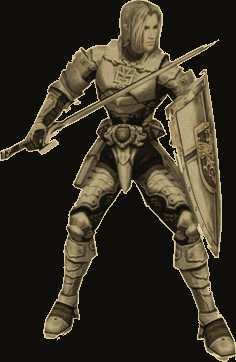
Chapter 19. The Rise of Two Kingdoms
For several generations the wars dragged on, until out of the depths of chaos rose Gracia, to bring all to unity. A man named Paris, possessor of enormous strength and military mastery, made himself and his people famous, winning countless battles and conquering lands in the name of Beheim.
Paris became a legend when he and his army met the highlanders of Quoser. In a desperate clash with Thor, the finest warrior of Quoser, Paris dealt his opponent the decisive blow. Thor, who had never before been defeated, said:
"Are you truly a man? Such strength and speed!!"
Standing over his fallen foe, Paris cast his gaze across the field of battle and answered:
"I wish only to unite these lands... Brave warrior of the North, join me, and together we will destroy those who stand against us."
And Paris led the Knights of the White Hawk, the Knights of the Wind, and the highlanders who had joined them across the lands of Gracia, defeating many on his way and seizing so much land that Beheim grew fivefold from its former borders. Soon Paris overthrew the ruling power by force and ascended the throne.
Meanwhile, a new leader appeared in the southern lands. Charismatic and self-assured, a man named Raoul gathered a new force beneath his banner.
Raoul's fiery speeches smashed his opponents to pieces - no worse than a sword or a mace could do. Here is one example of his oratory: "Rulers of the lands! Do you not see what is happening beyond our lands? Our enemies are preparing to move against us as we speak! The kingdom of Elmore has long thirsted for our lands and riches, and only awaits a convenient time to attack. And if Gracia too decides to attack, we are lost! We have no choice - we must unite our forces to be ready for war."
First Raoul united with his ally Inadril, and these lands received the name Aden. Unlike Paris, Raoul pursued a non-violent policy and easily annexed the lands of Giran and Dion to Aden.
In Oren, Raoul unexpectedly met with resistance to his plans. Oren did not wish to acknowledge any leader other than its own. In the end this led to war, from which the kingdom of Aden emerged the victor. The kingdom of Gludio voluntarily laid down its arms and joined Aden, thereby completing the unification. Afterward, Raoul became known as the King of Unification.
Chapter 20. The Heirs
Soon after the unification of Aden, Gracia finally consolidated itself when the last opponent of Paris fell dead at his feet. Paris moved the capital to Arpenino and reorganized the structure of the kingdom.
Aden, having successfully repelled the attacks of Elmore, proved that it was to be reckoned with. Yet soon tragedy befell Aden - the sudden death of Raoul. Sensing that the right moment to attack had come, Elmore struck again, this time from the north. Raoul's successor, Travis, held back the attackers, but soon died of an unknown illness. The next claimant to the throne was the sixteen-year-old Amadeo.
Hearing of this, Paris exclaimed, "The very heavens favor the kingdom of Gracia! A sixteen-year-old king? This will be the ruin of the kingdom of Aden!" But Paris had gravely underestimated the young Amadeo. The boy won a victory over Elmore in a large-scale battle. Paris felt the chance to seize Aden slipping out of his hands. Ignoring all counsel, even that of his right hand, the advisor Dillios, Paris launched a massive offensive against Aden by land and by sea.
The result was incredible.
Esther, the exiled king of Elmore, joined Aden, with which his father had been at enmity for many years.
"Have you no pride? You should have fallen upon your own sword for taking the side of your father's enemy!"
Esther let the tirade pass and answered, "The cub can be dealt with later, but for now my chief aim is you."
The battle on Kiran soil became the turning point of this war, when the warriors of Gracia, wounded and demoralized, returned home with nothing. The failure of this war wounded deeply the pride of Paris, who had never before known the price of defeat. A little later Paris fell ill and soon died.
The heir to the throne of Gracia became Carnaria - a frail man whom many considered incapable of ruling a kingdom. Kukarus challenged him, deciding to ascend the throne himself. Dillios, the former advisor of Paris, supported him, and he began to gain renown among the people of Gracia. In the end, he and Carnaria divided the kingdom into two camps. Northern and Southern Gracia became bitterest enemies, directing all their energy into the struggle against one another.
This news delighted Amadeo, who used the lull in the war to strengthen and fortify the kingdom of Aden. Thanks to his efforts, Aden, Elmore, and Gracia concluded a peace treaty. A hard-won age of peace had arrived.
Epilogue
When the stranger finished, dawn was beginning to break. The long night had passed, and the sunrise broke through the brightening sky. The fire had long since gone out, leaving only smoldering ash.
The storyteller lit his pipe and drew a deep pull.
"And so, my story is finished. Time will pass, and perhaps, who knows, it will continue? Who can say - perhaps your names too will one day be in my story?" The morning light illuminated everything around us. Suddenly I felt uneasy. As though something important were passing me by... It took some effort for me to speak, and I dared to ask, "Who are you? And why did you tell us all this... and... how do you know all of it?"
The man rose in silence. And the moment he stood to his full height, he began to grow! While he had been seated, he had been of normal size, but now he was truly enormous - nearly twenty feet tall - and his shadow covered our entire company. And then he slowly began to vanish! Dissolving as if into mist, in a sudden gust of wind he flew away like dust...
He did not answer me then, but I think that now I know who he was. He knew so much and described certain things in such detail... Surely only one who had existed from the very beginning of creation could know such things. Perhaps even one who had created humanity...